
- July 27, 2026
Tucked between some of the tallest mountain ranges on the planet, Skardu has quietly become one of Pakistan’s most talked-about travel destinations. Visitors arrive for the lakes, the valleys, and the base camp routes leading toward K2, but they often leave just as impressed by where they stayed. Hotels in Skardu have kept pace with rising demand, and today the city offers everything from riverside properties with mountain views to simple, comfortable rooms suited for travelers passing through on their way to Deosai or Shigar. Picking the right base for your stay can make a real difference, since many attractions are spread across the valley and require early starts.
A Region Defined by Its Language and People
Baltistan has a distinct cultural identity, largely shaped by its geography and history as a crossroads between South Asia and Central Asia. Balti is the language spoken throughout Skardu and the surrounding valleys, and it shares linguistic ties with Tibetan, reflecting the region’s ancient connections to the Tibetan Plateau. Many locals also speak Urdu and some English, particularly in areas frequented by tourists, but hearing Balti spoken in the markets and villages is part of what makes the region feel so distinct. Travelers who take an interest in local phrases or customs often find that doors open a little wider, with residents happy to share stories about their homeland.
Staying Local: Guest Houses Across the Valley
For travelers who want to slow down and experience Baltistan beyond the main tourist points, guest houses in Skardu offer a practical and welcoming option. Many are run by local families who have converted parts of their homes into guest rooms, giving visitors a chance to enjoy traditional Balti cooking and everyday conversation with their hosts. These stays are common in areas like Shigar and Khaplu, where smaller communities preserve a slower pace of life compared to the city center. Beyond affordability, the appeal lies in the connection they offer, a chance to understand the valley through the people who have lived there for generations rather than simply passing through as a tourist.
Must-Visit Places Around Skardu
Khaplu Valley
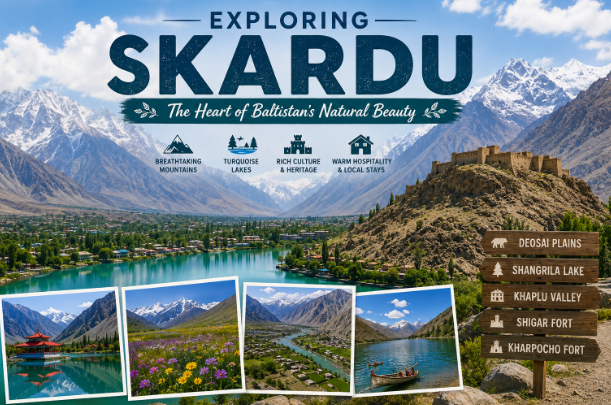
East of Skardu, Khaplu is home to one of the best-preserved royal residences in the region, the Khaplu Palace, now operating as a heritage hotel. The valley itself is dotted with apricot orchards and traditional stone houses, offering a glimpse into a slower, older way of life.
Deosai Plains
Sitting at over 4,000 meters, Deosai is often described as one of the highest plateaus on earth. Between June and September, the landscape bursts into color with wildflowers, and sightings of the Himalayan brown bear draw wildlife watchers from around the world.
Shangrila and the Twin Lakes
Lower and Upper Kachura Lakes remain two of the most visited spots near Skardu city. The Shangrila Resort along Lower Kachura has become something of a symbol for the region, though Upper Kachura offers a quieter alternative for those wanting fewer crowds.
Kharpocho Fort and Skardu City
Rising above the city, Kharpocho Fort dates back several centuries and once served as a defensive stronghold along regional trade routes. Climbing to the top rewards visitors with sweeping views over the Indus River and the surrounding cold desert terrain.
Shigar Fort and Valley
Shigar Valley blends history with scenery, anchored by the restored Shigar Fort, which now functions as a heritage hotel and museum. The valley’s orchards, rock formations, and traditional villages make it a popular stop for those exploring beyond the main city.
When to Visit
The months between May and early October bring the most stable weather, with clear skies making high-altitude routes like Deosai accessible. April and May bring blossoming fruit trees across the valley, while September and October shift the scenery toward autumn colors. Winter visits are far less common due to snow blocking mountain passes, but those who make the trip are often rewarded with a peaceful, nearly untouched version of the valley.
Getting There
Flights between Islamabad and Skardu operate regularly during the tourist season and are known for offering some of the most dramatic aerial views available on any commercial route, passing close to Nanga Parbat when conditions allow. Overland travel is also possible via the Karakoram Highway, though the route takes significantly longer and depends heavily on road conditions through the mountains.
A Few Tips Before You Go
Altitude sickness can affect travelers heading toward Deosai or higher trekking routes, so allowing time to acclimatize is worth planning for. Mobile network coverage can be limited in more remote valleys, so informing your accommodation of your daily plans is a good habit. Cash is still preferred in many smaller towns and guest houses, since card payment facilities remain limited outside the main city.
Closing Thoughts
Skardu, Baltistan, rewards travellers who take the time to look beyond its most photographed lakes and forts. Its language, its family-run guest houses, and the quiet hospitality found in its valleys all shape an experience that feels personal rather than staged. Choosing where to stay, whether a well-appointed hotel or a small guest house tucked into a village, becomes part of the story travelers carry home from this remarkable corner of Pakistan.
Comments