
- October 27, 2026
For many trekkers, Mera Peak Climbing in Autumn provides a practical way to experience Nepal’s high mountains without joining a large expedition. Mera Peak has three main summits, Mera North at 6,476 meters, Mera Central at approximately 6,461 meters and Mera South at around 6,065 meters.
Since many guided expeditions go to Mera Central, make sure you confirm which summit you will be climbing with your climbing operator before you book. The journey features quiet trails, mountain villages, high passes, glaciers and a challenging summit day.
Autumn is usually the busiest season for trekking in Nepal. The main months are September, October and November but the conditions vary from year to year. Many travellers prefer this time as the monsoon rain has generally subsided, the trails are in good condition and mountain views are often clearer.
This guide explains why autumn is popular for Mera Peak, what the weather is like, how the route feels, and what you should consider before booking your trip.
Why autumn attracts so many climbers
For travellers comparing seasons, Mera Peak autumn trekking offers a useful balance of active trails, available lodges, and organised travel services.
The biggest reason people choose Mera Peak Climbing in Autumn is the balance between weather and trail conditions. During the monsoon, heavy rain can affect roads, flights, and lower trekking paths. By early autumn, the rain generally begins to ease. October and November often bring dry walking days and cool nights, which suit a long approach trek.
Autumn also fits well with the schedules of international visitors. Many people plan their annual holiday during this period, and Nepal’s trekking agencies, guides, lodges, and porters are fully active. This makes it easier to arrange transport, accommodation, equipment rental, and a flexible itinerary.
There is one trade-off: popular trails and flights can become busy. A little advance planning is useful, especially if you want specific dates or a private guide.
Autumn weather on the Mera Peak route
The weather changes as the route gains height. Villages at lower elevations may still feel mild during the daytime, while the upper camps can be cold throughout the day. Near the summit, wind and low temperatures require proper clothing and sound acclimatisation.
September can carry some remaining effects of the monsoon, particularly during the first part of the month. October often brings stable conditions, though mountain weather is never guaranteed. November is colder, especially at night, but the air can feel crisp and the trails are often quieter than in October.
| Month | Typical trail conditions | Main points to consider |
| September | Rain usually decreases, but wet days remain possible | Flexible flights and waterproof layers are useful |
| October | Dry walking conditions are common | The busiest month; book transport and rooms early |
| November | Cooler and often quieter | Prepare for colder camps and shorter daylight |
The summit attempt normally begins very early, often around midnight or in the early morning. This timing allows climbers to use firmer snow and return before afternoon weather develops. Your guide will decide whether conditions are suitable, so a spare summit day can be valuable.
Clearer mountain views
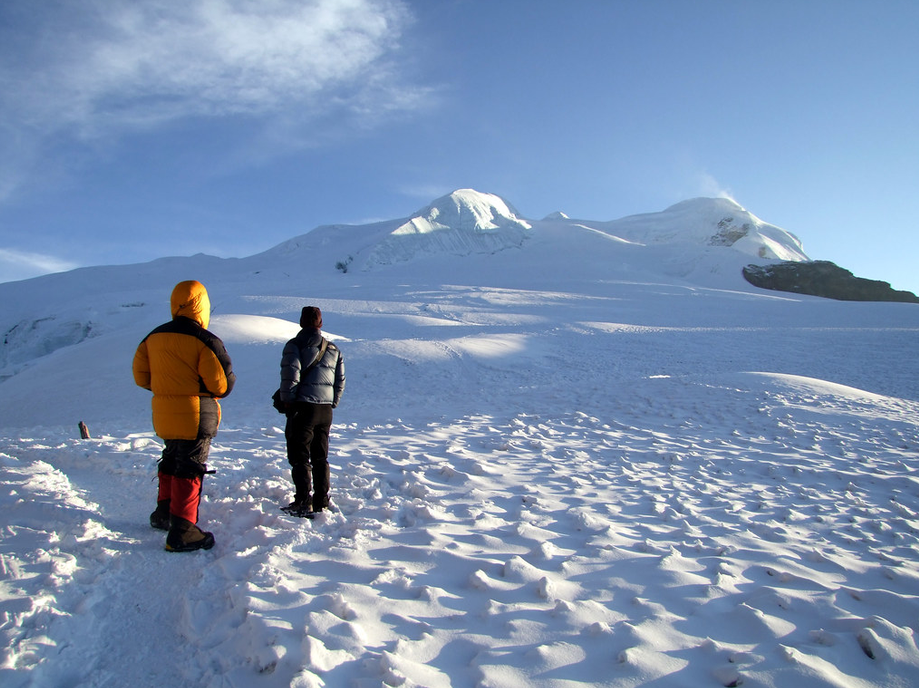
A major attraction of Mera Peak Climbing in Autumn is the chance to see a wide group of Himalayan peaks. From high points on the route, views may include Everest, Lhotse, Makalu, Cho Oyu, Baruntse, and several other peaks in the eastern Khumbu region.
Views are not guaranteed every day. Clouds can gather, and wind can move snow across ridges even in a good season. Still, the post-monsoon atmosphere often gives the route a cleaner appearance than the humid summer months. Early mornings are usually the best time for photography and mountain views.
The landscape also changes during the walk. You may pass through forest, rhododendron areas, steep valleys, pastureland, and high rocky terrain. Autumn colours are often visible in the lower forests, while the upper route becomes more open and alpine.
The route and its changing character
The journey to Mera Peak usually begins with a flight to Lukla, followed by a trek toward the Hinku Valley. The exact route depends on the itinerary. Some itineraries cross the Zatrwa La from the Lukla side, while others approach through villages such as Paiya, Panggom, Ningsow, and Kothe. Your operator should confirm the route, overnight stops, and acclimatisation schedule before departure.
The approach is not simply a long walk to base camp. It involves steep climbs, narrow trails, forest sections, suspension bridges, and several days of adjustment to altitude. Kothe and Thaknak provide useful rest and acclimatisation points before the trail reaches Khare.
From Khare, climbers usually receive basic mountaineering training before moving toward Mera Base Camp and High Camp. The upper route involves glacier travel and may require crampons, a harness, an ice axe, and other technical equipment. Confirm with your operator which items are supplied, which you must bring or rent, and what training is included before the summit attempt.
Why autumn trail conditions are useful
During Mera Peak Climbing in Autumn, most of the lower route from Lukla through the Hinku Valley toward Kothe is often easier to manage than during the monsoon, although muddy trails and difficult conditions can still occur. Rainfall generally decreases, but landslides, loose stones, and other trail hazards remain possible, so climbers should follow local advice and remain flexible with their plans.
Dry trails can also help with pacing. You are less likely to spend long periods avoiding puddles or waiting for rain to pass. That gives you more time to walk steadily, rest properly, and reach the next lodge before dark.
Even so, high-altitude trails can be rough. Loose stones, steep steps, frozen ground, and early snow are all possible. Good boots, walking poles, and a measured pace remain important.
Acclimatization and physical preparation
Mera Peak is sometimes described as a trekking peak, but its altitude should not be underestimated. The summit is higher than many well-known peaks, and the final ascent can be tiring even for people with previous trekking experience. Acclimatization days are not spare days to remove from the itinerary; they are part of the climb.
A normal preparation plan should include long walks, stair climbing, uphill hikes, and regular aerobic exercise. Strength work for the legs and core can also help with carrying a daypack and moving on uneven ground. Try to train in the boots you intend to use in Nepal.
Choosing the best time to climb Mera Peak is only part of the preparation. Your itinerary should allow enough time for acclimatization, because a rushed schedule can make the climb more difficult and increase the risk of altitude-related problems.
What to pack for an autumn climb
Your equipment should cover the warm approach trail, cold nights, and technical sections above base camp. Layering works better than bringing one very heavy item because temperatures can change during the same day.
| Equipment category | Useful items | Notes |
| Trekking clothing | Moisture-wicking tops, fleece, trekking trousers, rain shell | Use layers that dry quickly |
| Cold-weather clothing | Down or synthetic jacket, thermal layers, insulated trousers | Needed at higher camps and during the summit attempt |
| Footwear | Broken-in trekking boots, mountaineering boots, camp shoes | Check crampon compatibility before the climb |
| Technical kit | Helmet, harness, crampons, ice axe, ascender, carabiners | Confirm what the operator supplies |
| Personal items | Headlamp, sunglasses, sunscreen, water bottles, first-aid supplies | Carry spare batteries and sun protection |
| Sleeping equipment | Warm sleeping bag and liner | Confirm the temperature rating with your guide |
The best time to climb Mera Peak does not mean you can pack lightly without checking the forecast. Late autumn can be colder than expected, and weather at High Camp can change quickly. Keep gloves, a hat, spare layers, and a headlamp easy to reach.
Accommodation, flights, and logistics
Teahouses are available along much of the approach route, but facilities become simpler at higher elevations. Rooms may be basic, showers may cost extra, and charging may be limited. A power bank, sleeping bag, quick-dry towel, and a few personal snacks can make the trip more comfortable.
Lukla flights are affected by weather and air traffic. Autumn is popular, so flights can fill quickly. Build some flexibility into your itinerary instead of arranging an international connection immediately after the expected Lukla return. Your agency can advise on the most suitable flight plan.
If you are travelling independently, you will need to arrange permits, a guide, accommodation, transport, and technical support. A reputable operator can manage these details and provide advice on current route conditions.
Autumn festivals and local life
Autumn can also be a pleasant time to experience village life in the Khumbu and Hinku regions. Nepal’s major festivals often fall around September or October according to the lunar calendar. Dates vary annually but local celebrations can include music, family get-togethers, visits to monasteries and busy market days.
Respect is still significant. Ask before you photograph people, monasteries or ceremonies. Dress modestly when visiting religious sites, and heed local guidance on walking around mani walls and chortens. Small actions like using designated rubbish bins and carrying reusable bottles help reduce pressure on remote communities.
Two practical reasons to choose October or November
- More predictable planning: Flights, guides, lodges, equipment rental and transport are generally available in the main trekking season in autumn, but bookings can fill up quickly.
- Favourable trekking conditions: October often offers relatively dry walking conditions, while November brings cooler temperatures and may have fewer trekkers on some sections of the route.
These advantages explain why Mera Peak Climbing in Autumn appears on so many Nepal trekking itineraries. They do not mean every autumn day will be dry or that the summit will be possible on the first attempt. Mountain travel always requires patience and a willingness to change plans.
Is autumn suitable for first-time climbers?
Autumn can suit first-time peak climbers who are physically prepared, comfortable with several days of trekking, and willing to learn basic mountaineering skills. Previous experience with crampons is helpful but not always required if a qualified guide provides proper instruction.
The more important factors are fitness, attitude, acclimatisation, and the quality of support.
Choose an itinerary with enough rest days and ask how the operator handles emergencies,
weather changes, and altitude illness. Check that your insurance covers trekking and climbing at the altitude of Mera Peak, including evacuation if necessary.
If you prefer a quieter experience, consider early September or late November, while accepting that temperatures and weather may be less predictable. October is often the first choice for people seeking the most established autumn conditions.
Final planning advice
Mera Peak autumn trekking is easier to prepare for when you begin organising your equipment, fitness, and travel arrangements well before arriving in Nepal.
Start preparations several months ahead. If concerned about altitude or pre-existing health conditions, consult a physician. Break in your boots and test out your gloves. Practice carrying a daypack on uphill walks. Check to see whether the operator provides crampons, harnesses, helmets, ice axes, ropes and climbing boots.
Don’t judge the trip by the summit result alone and leave your itinerary flexible. The experience consists of the arrival through the Hinku Valley, time spent in mountain communities and the slow transition from forest to glacier.
Most of the travellers prefer to go for Mera Peak Climbing in Autumn as it is a combination of manageable logistics and a higher chance of favourable trekking conditions. October might be the busiest month, but September and November can work well if you want to avoid crowds or experience different weather.
Conclusion
The best time to climb Mera Peak depends on your goals, preparation and flexibility in light of weather conditions. Autumn remains a favourite option as the post monsoon season often offers dry trails, clear morning views, open lodges and reliable trekking services.
The autumn trekking season on Mera Peak can make for a rewarding introduction to high-altitude mountaineering if you have a structured itinerary and the right equipment, experienced support and realistic expectations. Plan carefully, listen to your guide and let the final schedule be dictated by the mountain conditions.
Comments